Mixed pyrolysis: New prospects for the recycling of lithium-ion batteries
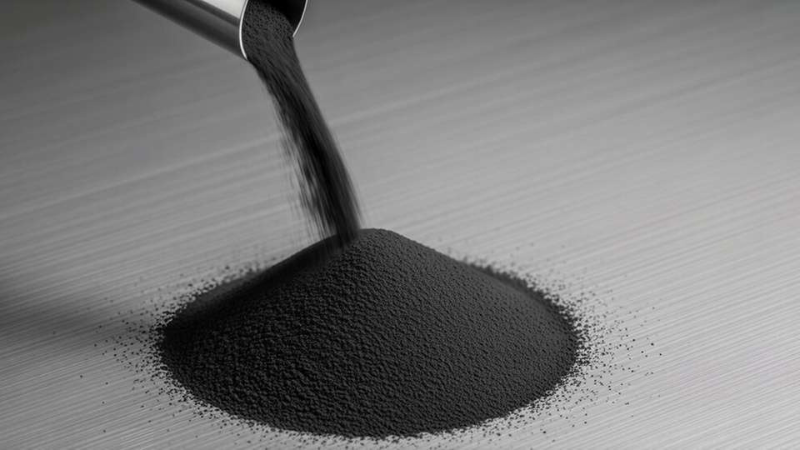
Thermal processes play a key role in determining the recovery rates of critical raw materials in the recycling of lithium-ion batteries (LIB). The RWTH Aachen University in Germany is currently investigating the optimised thermal conditioning of LIB materials as part of a two-year Research Project using a LÖDIGE new Prototype Reactor. Halfway through the project, the first results are now available and demonstrate the great potential of “mixed pyrolysis” in the thermal pre-treatment of LIB materials.
The increasing use of lithium-ion batteries (LIBs) in electric vehicles, portable devices and stationary energy storage systems means that the volume of end-of-life batteries is also rising rapidly worldwide. According to calculations by Fraunhofer ISI [Source 1], the volume of batteries requiring recycling in Europe alone is set to reach 420 kilotonnes per year by 2030 with an upward trend continuing beyond this date.
At the same time, pressure from environmental regulations is mounting. For instance, the EU Battery Regulation stipulates stricter recycling targets and, in the future, the use of recycled LIB materials in the production of new batteries in order to promote sustainability. A lithium recovery rate of over 80 per cent must be achieved by 2031. The target is even stricter, at 95 per cent for cobalt, copper and nickel.
To meet these targets, robust, economical and environmentally sound processes and facilities are required. While the basic recycling processes are now well understood, further development is required to optimise and implement these on an industrial scale.
Joint Research Project
As a part of the ProMotion Research Project, the Institute for Process Metallurgy and Metal Recycling (IME) at the RWTH Aachen University in Germany is investigating the use of an innovative Prototype Reactor for optimised thermal pre-treatment of LIBs (lithium-ion batteries) and more specifically EoLLIB materials (end-of-life lithium-ion batteries). This project is being carried out in collaboration with the Project Coordinator Gebrüder Lödige Maschinenbau GmbH in Paderborn, Germany.
The project, which is funded by the Federal Ministry of Education and Research (BMBF), began on 1 January 2025 and is scheduled to run for two years. It is supported by the Öko-Institut e.V., which will carry out a life cycle assessment of the optimisations achieved in accordance with the requirements of the DIN EN ISO 14040/44 standards.
The main objective of the project is to achieve a significant optimisation of the process and, consequently, a substantial increase in the recovery rates of critical raw materials contained in LIBs, such as lithium and other valuable metal compounds. In line with the German Federal Ministry of Education and Research (BMBF) battery research framework, the aim is to develop a scaling-up concept for the use of the Prototype Reactor for industrial purpose by the end of the project.
Scope of work and technological challenges
A variety of pyrometallurgical, hydrometallurgical and mechanical recycling routes for LIBs already exist. However, previous scientific studies have shown that active material and foil fractions cannot be fully thermally processed using conventional batch reactors and rotary kilns without encountering various technical limitations. This impairs the efficiency of LIB recycling processes.
The ProMotion Research Project therefore focuses on the thermal pre-treatment of various battery fractions. This process step is crucial to achieving the set recycling targets as it removes organic components and forms soluble lithium compounds that can be easily separated.
This process takes place at the start of the recycling chain, after the battery modules or cells have been discharged and shredded. This is usually followed by hydrometallurgical or pyrometallurgical treatment of the active material. Various options are available for the thermal conditioning of LIBs, including incineration, vacuum drying to deactivate flammable electrolytes - and pyrolysis. The latter is the focus of the ProMotion Project.
Pyrolysis
In pyrolysis, the material is heated in an oxygen-free environment, either by using an inert atmosphere or by operating under a vacuum – until the organic binder, separator and electrolytes decompose. The resulting decomposition of products can then be removed via exhaust gas.
Removing the organic components improves the delamination of current-conducting foils, enabling the recovery of pure copper and aluminium foils as well as a high yield of active material. Furthermore, higher leaching efficiencies and improved kinetics can be achieved in a downstream hydrometallurgical process step, as contact between the leaching agent and the active mass is not impaired by organic, mostly insoluble phases.
The process temperature range is generally between 500 °C and 600 °C, i.e. below the melting point of aluminium, as melting would impair subsequent mechanical separation and process steps.
Tests in a specially developed reactor
High temperatures and other operating conditions such as the presence of corrosive and potentially hazardous substances and exhaust gases, place complex demands on the equipment and reactors used in pyrolysis. Furthermore, uniform penetration of the material at a consistent temperature and homogeneous wetting with the specified process gases are required.
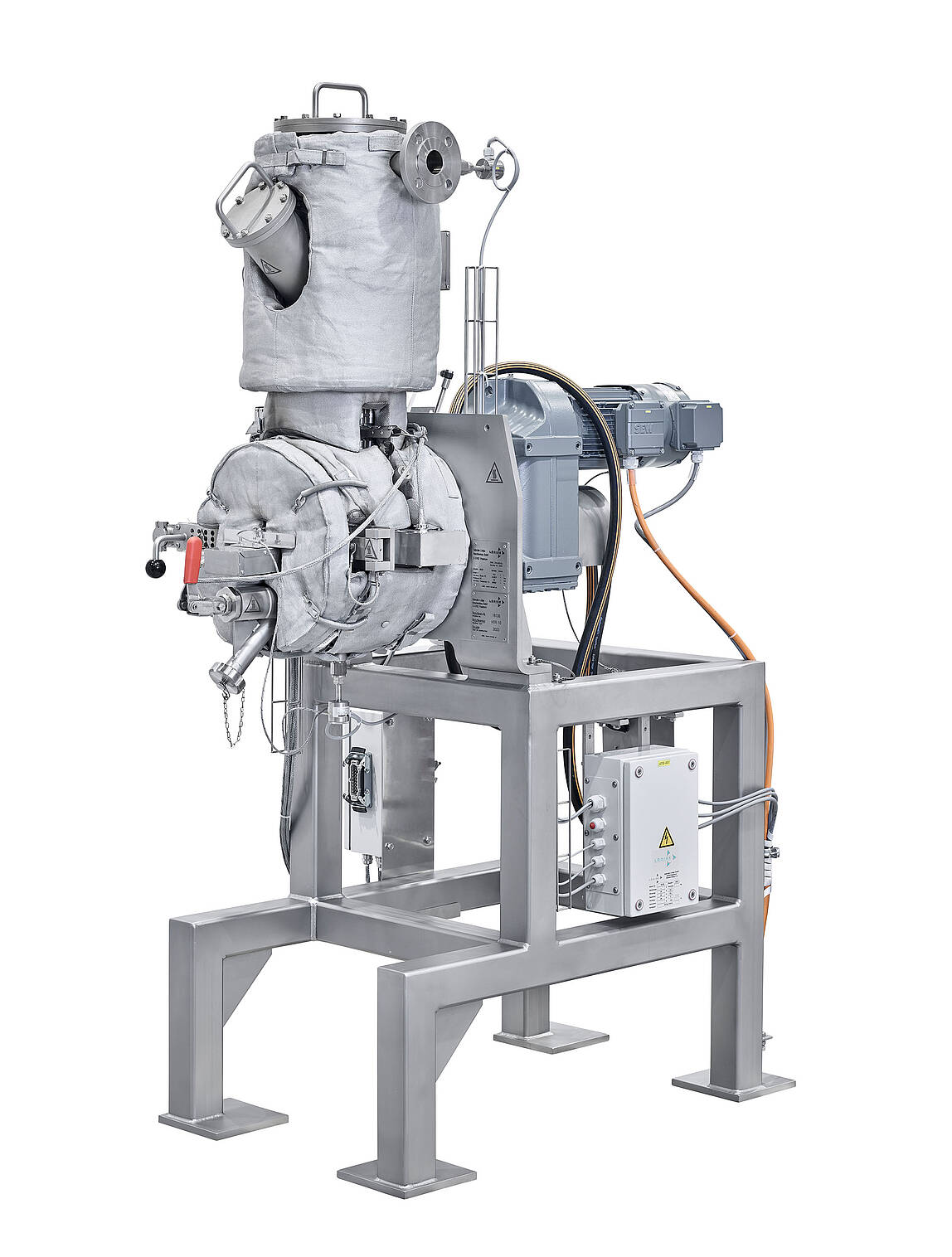
Suitable solutions for the complete thermal conditioning of LIB materials are lacking currently, particularly on a large scale. LÖDIGE – a world leading supplier of mixers, coaters, granulators, dryers and reactor systems – has addressed this challenge by developing a specific Prototype Reactor. This is now being used as a laboratory-scale pilot for a test series as part of the ProMotion Project, with the aim of optimising it for large-scale implementation and automation.
Unlike conventional pyrolysis reactors (such as rotary or static reactors), the machine used at the RWTH Aachen University operates according to the fluid bed process introduced by LÖDIGE into mixing technology. In a horizontal, cylindrical drum, the mixing tools rotate close to the wall. Their circumferential speed and geometric shape are designed such that they move the mixed products radially out of the product bed and into the free mixing space against the force of gravity, whilst simultaneously moving them in the axial direction. The mixing tools are shaped and arranged in such a way as to ensure reliable product transport and sufficient recirculation. The mechanical fluid bed generated in this manner ensures the most intensive mixing, keeping the whole batch in movement, even at high throughput rates and short residence times.
Mid-term results, first conclusions and outlook
During the first year of the ProMotion Project, the RWTH researchers have already used the Prototype Reactor for around 600 hours of trouble-free experimental operation. They fed the reactor with unscreened shredded material, finely screened black mass and coarse fractions from NMC and LFP batteries. The mixing pyrolysis process has proven to be ideally suited to the thermal pre-treatment of EoLLOB materials with different cell chemistries in this first phase of the project. This is because it combines the genuine advantages of pyrolysis and mixing.
Build-up on the reactor wall is reduced compared to a rotary tube reactor for example and homogeneity is significantly improved. Furthermore, the fluid bed process creates larger gas-solid exchange surfaces than in a static reactor. It also ensures a homogeneous heating profile within the bed, even with larger quantities, making scaling possible. Other positive effects include shorter process times to reach the desired core temperature, resulting in improved leaching efficiencies during lithium recovery and in the next water leaching stage.
This specific form of pyrolysis is an effective and highly scalable method for decomposing and removing organic components, as well as forming soluble lithium compounds that can be easily separated. Subsequent hydrometallurgical processes are positively influenced by factors such as improved wettability and a finer particle size of the black mass.
The quality of the recycled material, the recovery rate of valuable materials and the leaching yield are all significantly improved. At the same time, the pyrolysis process is considerably faster than in the static method: the product is fully pyrolysed in less than 30 minutes (instead of 1.5 - 2 hours).
In the second half of the project, a concept for industrialization and scaling-up of the prototype reactor will be developed and assessed from both economic and environmental perspectives. The prototype reactor is currently being structurally optimised and modified accordingly based on the findings to date.
Sources:
[1] Fraunhofer-Institut für System- und Innovationsforschung ISI, Karlsruhe: https://www.isi.fraunhofer.de/de/blog/themen/batterie-update/recycling-lithium-ionen-batterien-europa-starke-zunahme-2030-2040.html